
 RU
RU  EN
EN 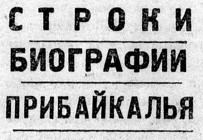 On April 4, 1919, at the height of the civil war and foreign intervention, V.I. Lenin signed a decree "On medical areas of national importance," according to which all medical areas and resorts in the country were transferred to state ownership and should be used for the treatment of workers.
Thus, the brightest page of the development of domestic resorts, the formation and flourishing of Soviet sanatorium-resort institutions was opened.
Eastern Siberia is famous for its numerous and diverse mineral waters and healing mud. Many springs are superior in their healing power and effectiveness to identical springs in the resorts of the European part of the country. It is time to make greater use of the resort wealth and therapeutic opportunities that nature has so generously awarded to Eastern Siberia. It's time to free Siberians from trips to western and southern resorts thousands and thousands of kilometers away. It is known that a long journey is associated with the inability to strictly adhere to a diet, diet, and rest in general. In addition, it tires the body, especially a sick person. A large difference in climate and a sudden change in the time zone often lead to a deterioration in the patient's condition upon arrival at the resort, especially for the elderly or those suffering from cardiovascular diseases. Treatment at the nearest resort, the climate of which is almost the same as the patient's permanent place of residence, as practice convincingly shows, is as effective as possible.
And among the many health resorts, Goryachinsk, one of the oldest resorts in Siberia, located in the village of the same name in our district, on the picturesque eastern shore of the pearl of our Homeland, Lake Baikal, is becoming increasingly popular and famous. The resort is confined to the southwestern low and mostly coniferous forested spurs of the Turkinsky Range, which is part of the Ulan-Burgasy range, stretching along the eastern shore of Lake Baikal.
The gentle slopes of this ridge, which have retreated far from the shore of Lake Baikal, encircle the valley in which the resort is located in a huge semicircle, and their continuation forms the Turkinsky Cape in the southwest and Listvenichny in the northeast. These capes, which extend far into Lake Baikal, are bounded by a vast bay, which is relatively shallow and therefore better warmed up. The low shores of the bay are covered with sand and are a beautiful natural beach in summer.
The resort is separated from Lake Baikal by an 800-meter strip of forest, which protects it from the winds from the lake, as well as protects it from sand dunes.
The resort is connected to the capital of Buryatia, Ulan-Ude, by the well-known Barguzin highway, which is paved in places for a considerable length. For lovers of the beauty of the majestic Siberian nature, traveling along the named highway will bring a lot of joyful moments. In clear weather, a wide panorama of the Khamar-Daban range, covered with taiga, opens from the mountain passes. Then the road leads through the picturesque valley of the Itantsy River and, finally, along the shore of Lake Baikal.
The resort is famous for its low mineralized nitric, siliceous, alkaline hot mineral waters. Springs that are found on the territory of the USSR, usually in mountainous areas (Kuril Islands, Kamchatka, Transbaikalia, Baikal region, Sayan Mountains, Altai, Pamirs, Tien Shan, Caucasus), provide great balneological value.
However, despite the abundance of hot nitrogen springs in the country, there are relatively few resorts of this type. Until recently, this type of mineral water was less studied than other types (carbon dioxide, rhodium, hydrogen sulfide, and others). But in recent years, significant attention has been paid to the in-depth study of nitrogen mines.
Scientists explain the therapeutic effect of this mineral water by its content of nitrogen, silicic acid, and trace elements that make up the enzymes of certain harmonics (titanium, lead, copper, and especially tungsten, molybdenum, and silver, whose content exceeds that in blood serum). Fluorine contains no more than 3-4 mg /l. Of the macronutrients, sodium sulfate predominates. The total mineralization does not exceed 0.5-0.6 g/l. The water temperature is plus 53-55 degrees. In recent years, a number of organic compounds (such as bitumen, humins, naphthenic acids), which are found in hot springs, including our resort, have been given medicinal importance. It contains mineral water and a small amount of rhodon. Water is mineralized at a depth of 2-3 kilograms. It is colorless, transparent, tastes slightly salty-bitter, astringent.
A mineral spring gushes at the top of a small ravine that stretches through the resort towards Lake Baikal. All the resort facilities are located on both sides of it. There are several griffins of low-flow hot mineral water near the main thermal spring. The total flow rate of all sources is about 2 million liters per day.
According to its therapeutic purpose, Goryachinsk is a balneological, low-mountain, coastal resort.
The exact date of the resort is not known. But the source itself was discovered in 1753 in an uninhabited taiga near the Verkhneudinsk–Barguzin postal riding trail, and named after the nearby Turka River (meaning omul in the Evenk language). It was named the Turkinsky Key. In the future, the resort itself was called the Turkinsky Mineral Waters until the beginning of our century. Interestingly, there are still two legends about the discovery of the spring among the local old-timers.
According to one of them, it was discovered by a Buryat from the valley of the Barguzin River, who hunted in this area in winter. While hunting, he accidentally injured his beloved dog, which then ran away. After 2-3 days, the hunter, having finished his business, went to look for his faithful friend.
The hunter who came out to the spring was amazed by the view he saw – among the snow, framed by frosted trees, a stream with hot water ran along the bottom of the ravine. Its shores were covered with bright green grass. The hunter was even more surprised when he soon found a dog with a healed wound. Upon returning home, he told his classmates about the amazing source. And since that distant time, having experienced the healing power of the spring for themselves and sick pets, the aborigines of the Baikal region began to consider it "sacred" and held religious rituals on its shores. The absence of snakes around the spring further reinforced its fame as a "holy" place.
For a long time, Russians did not know about the existence of a hot spring with healing powers. Academician G. Georgi, who visited the spring in 1772, noted that the Buryats of the Baikal region, on the instructions of their lamas, used the spring at the beginning of the XVIII century. So it is likely that the local population – the Buryats and Evenks who lived around Lake Baikal – knew the source long before the development of Siberia.
And here is the second legend. Irkutsk merchants, who were transporting industrial goods to residents of the Barguzin Valley along Lake Baikal in exchange for furs, were caught in a violent storm near the spring. Their boats were overturned and people were thrown ashore. The miraculously saved people, in gratitude, erected a cross made of foliage, the remains of which survived until 1959. The place is still called Kresty (Crosses). Finding themselves in an uninhabited taiga, the survivors decided to get to the nearby settlements of the Barguzin River valley. But they had not gone more than a kilometer when they discovered a large stream with warm water flowing into Lake Baikal. Climbing up it, they found traces of people staying and being treated in a hot stream, and soon the "patients" themselves.
The beginning of the resort's organization dates back to the 70-80 years of the XVIII century, when, by order of the Irkutsk governor, the first primitive swimming pool was built over the spring in 1775, and by 1779 other resort buildings. The Russian Academy of Sciences received its first information about the source in the second third of the 18th century.
Врач курорта «Горячинск»: Ю. Кузнецов,
Корреспондент: Т. Баймин,
Газета "Прибайкалец", дата публикации не известна.
*The author's spelling and punctuation are preserved