
 RU
RU  EN
EN 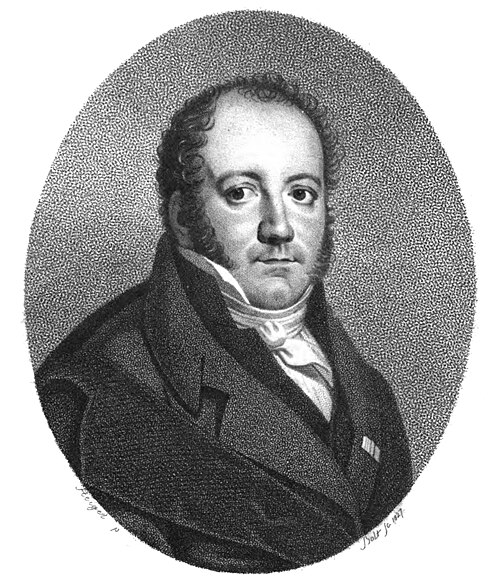
At the beginning of the 19th century, the Resort was recognized for its public importance, and its permanent exploitation began.
In 1808, a German-language book, " Description of the Turkino Mineral Waters on Lake Baikal, " by Dr. Osip Osipovich Reman, was published in St. Petersburg. This book was published in St. Petersburg in German, and the resort gained international fame.
For his description of the source, on November 15, 1807, O. O. Reman received royal favor, and on May 12, 1808, he was elected a member of the Vilnius Medical Society.
In 1810-1811, the first sanatorium in Eastern Siberia was founded near the thermal spring, initially called “Turkinskiye Greenhouses”, and a little later received the name “Turkinskiye Mineral Waters”.
The contribution of Irkutsk Governor Nikolai Ivanovich Treskin to the establishment and development of the resort cannot be overstated. Through his efforts, as well as donations from the merchant Kuznetsov, a central building and a bathhouse for "high-class" guests were built in 1811. The central building and bathhouse were connected by a corridor. Two outbuildings for the administrator and service staff were built nearby.

In 1810, the area of what would become Goryachinsk welcomed ten families of political exiles, who became the de facto founders of the village and its first hydropathic establishment. From that moment on, the resort became an official state medical institution, and construction began on the first facilities for treatment and recreation.
Materials from the State Archives of the Irkutsk Region confirm the exact date of foundation: June 20, 1810 .
It was then that it was transferred from an unorganized treatment facility to the Public Contempt Department. At that time, it was a unique healing spring in Transbaikalia, its existence known to the state. The resort's development accelerated further after a path was laid in 1812 from the village of Guruleva to the Turkinsky Greenhouses; previously, there had only been a path.
It was the exiles who made a key contribution to the resort's development. This is because undesirable members of the Russian elite, those opposed to the government, were sent to Lake Baikal. These were well-educated people, capable of not just exploiting local resources, but developing them.
"The earliest known physician at Turkinsky Mineral Waters was the paramedic Yakov Mykin. Subsequently, from 1850, the position of physician was held by the court councilor Ivan Vasilyevich Inozemtsev. Subsequently, from 1899 to 1920, the Turkinsky Civil Hospital and mineral springs were managed by the experienced physician Vasily Mikhailovich Muratov, who played a key role in the resort's transformation. Under his leadership, new buildings were designed and constructed, significantly improving guest accommodations. Durable cast-iron bathtubs were installed in place of the worn-out wooden bath tubs, ensuring patient comfort and safety," writes the portal infpol.ru.
Goryachinsk is considered the first resort in Siberia to receive government subsidies. In 1823, staff positions were established for the Turkinsky mineral waters: a doctor and a medical apprentice. Until then, visitors had to use the springs at their own discretion, heeding only the caretaker's advice . In the 1930s and 1940s, some Decembrists received treatment here . They were allowed to undergo rehabilitation there immediately after their hard labor.
In 1824, Ferdinand Wrangel, the renowned explorer of the northern seas, visited the Turkinsky springs. He was treated for rheumatism here and was apparently very pleased with the healing effects. On August 20, 1939, Decembrist Fyodor Vadkovsky wrote to S.F. Timiryazeva: "This spring can be called miraculous, since it alone does more good than all the Siberian doctors combined."
In 1830, there was a hospital with 20 beds here.
Information collected from Internet sources, including: irkipedia.ru, ru.wikipedia.org, 101hotels.com and other sources.