
 RU
RU  EN
EN 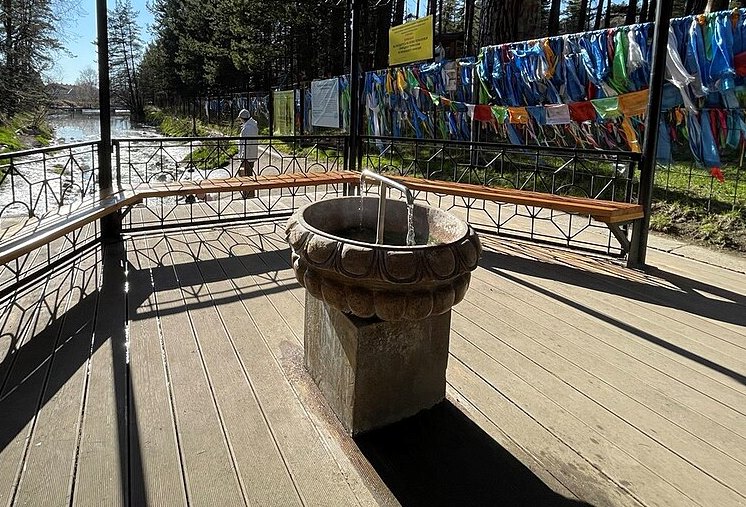
The hot mineral spring, where the Goryachinsk resort later emerged, was discovered in 1751.
But even earlier, the hot spring was used by the local population—Evenks and Buryats: those who "suffered from stomach aches," those who "had aching bones," and even those who "had no children." And when the first Russian settlers arrived, they too took to healing themselves with the life-giving water.
According to folk legend, the healing spring was discovered by a hunter who, after a taiga skirmish, abandoned his wounded dog there. Returning some time later, he found the dog completely healthy. Noticing the dog's tracks leading into the water, the hunter surmised that the water had healing properties. He then immersed himself in the water, and the illness that had long plagued him disappeared. Afterward, the hunter told the locals about the healing spring, and people flocked to the spring for healing.
The first information about the source dates back to 1753. In the Irkutsk Chronicle of Krotov and Pezhemsky for that year it is reported: "Turkinsky hot springs were discovered beyond Baikal" (Irkutsk Chronicle. Chronicle of P.I. Pezhemsky and V.A. Krotov. - Irkutsk, 1911, 395 p.). The same is stated in the certificate of the Order of Public Welfare. From the files of the Order it is clear that the Turkinsky mineral waters were discovered by the Tungus in 1753 (Irk. Archive file 40, fund 29). ( source )
In 1767, Academician 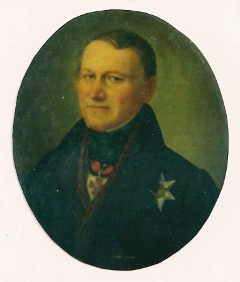 Eric Gustav (Kirill Gustavovich) Laksman visited the spring on behalf of the Academy of Sciences. He wrote: "In October 1766, I was unable to travel along the turbulent Baikal and was forced to remain in Ilyinsky Fortress, or Bolshaya Zaimka, until the New Year, since only at that time does Baikal freeze. Here I heard much about the power of the water of certain hot springs located about 150 miles from here, not far from Baikal at the mouth of the Turka River. I also saw people who were cured of serious illnesses here... On the 15th, I traveled 12 miles along Lake Baikal along a very poor road to the hot springs. They are located two miles from the lake, in a dense pine forest on a low, marshy plain. The stream begins with three springs located nearby. They flow very powerfully—I have never seen such large and water-rich springs. 90 fathoms below these springs is a fourth spring, right in the stream, and another 21 fathoms below is a fifth, also right in the middle of the stream. Each of these last two springs has a bathing box, similar to the pig sties of Swedish peasants. Hot water flows into this box from the front, and warm water—to moderate the heat—flows from both sides.
 They say that in winter, because of the rising steam, this place is visible from afar. And when I was there, the warmth was extraordinary. All the swamps and small streams were frozen, so thickly that the ice could easily bear the weight of a horseman, and here, around the springs, on the banks of the stream, the vegetation (October 15) was in full spring attire…"
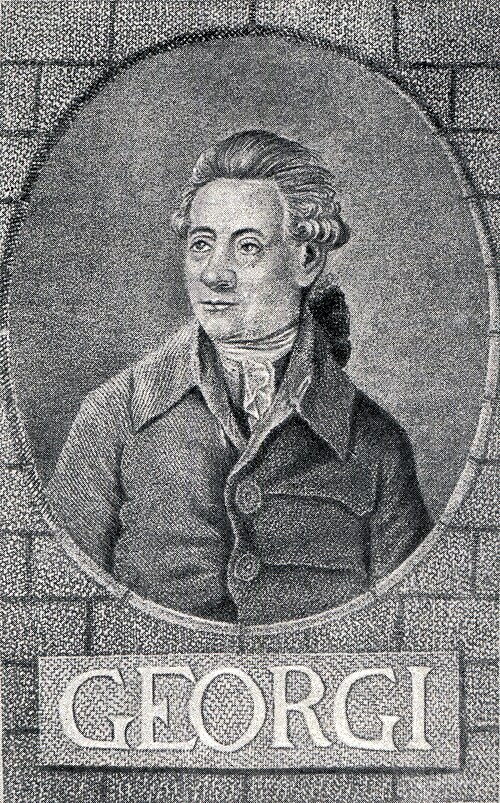
In 1772, Academician Johann Gottlieb Georgi (Ivan Ivanovich Georgi) visited the spring and first described it, naming it "Turka Mineral Waters" after the nearby Turka River. The scientist also conducted the first chemical analysis of the water.
The beginning of the organization of work at the resort can be considered the order of the Irkutsk governor from 1775 , according to which a primitive bathing house was built at the spring, and 4 years later other buildings appeared.
The first observations of the healing effects of water were made in 1779 by the Irkutsk staff physician Grunt.
A. Losev's chronicle for 1781 states: "By the care of this governor, during the current year, in the Verkhneudinsk district, on the Barguzin highway, a bathhouse was built for the use of the sick, and a decent house was erected in a channel of flowing warm waters. This year, two families have already been settled near them, near the Turka River, not far from the warm waters." Thus began the founding of the village of Turka. The settled families were engaged in ferrying across the Turka River.
The 1792 "Descriptions of the Irkutsk Viceroyalty" wrote: "Verkhneudinsk District. The most notable sites are the hot springs on the road to Barguzinsk, 230 versts from Verkhneudinsk, and no more than two versts from Lake Baikal. They are famous for curing various ailments. People lie down there, undressed, and stay there for half an hour or less. A house with eight rooms was built for this purpose."